Saturday, March 12, 2016

ANCIENT ROME


Today March 7th, is the day Kristine and I teach our unit plan.  Of coarse today would be the day that technology decides to not cooperate with us.  We got to Bishop Dunn nice and early eager to setup our presentation but our luck and none of the computers were connecting to the internet.  Needless to say that added to our stress and nerves since we hadn’t even begun yet.  Thankfully Mrs. Perk came to the rescue.  She was an amazing cooperative teacher and was always there to lend her assistance in any way possible.
            So now we finally have everything all setup and ready to go, we are about to take the students on an exciting adventure through Ancient Roman civilization.  We chose three important topics to teach to our students: Government, Architecture, and Culture.  Our unit plan began with a direct instruction lesson plan where we presented all of the key components and facts to the students.  We needed to give them a foundation for the activities that would be presented towards the end of the lesson.  The students were very engaged throughout the direct instruction portion of the lesson.  They were very inquisitive and paid close attention while we spoke.  There were of coarse of few times that we had to focus them back in.  During those times we used a focus phrase (Hocus Pocus Everybody Focus) to pull them back in. 
            After the direct instruction portion of the lesson plan we moved onto an inquiry based lesson.  Kristine and I created an interactive activity for the students to complete called Museum Madness.  The students were given a sheet with two columns on it.  The first column asked the students to record what image they saw at each station.  The second column asked students to record what or who the image actually was.  The activity was setup on IPADS with 10 stations around the classroom.  The students were really engaged during this part of the lesson plan and were so excited to go through each station.

            Our final part of the unit plan was cooperative learning.  During this section we broke the students up into groups and explained the expectations of the final activity.  Each group was given a picture and asked them to create a Thinglink.  Thinglink is a program that allows the student to add captions, text, details, pictures and information in the form of a collage.  The students were really excited to create theirs.  Our presentation wasn’t perfect and what could go wrong did go wrong, but all and all it went well.

Tuesday, March 8, 2016

ANCIENT CHINA

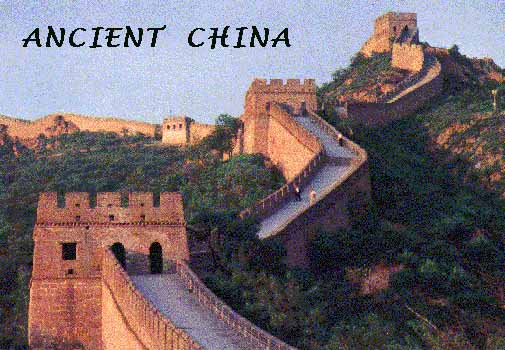
Today Group one taught their first lesson plan.  We learned about Ancient China.  I really enjoyed Mike and Colleen’s opening to their lesson about the Great Wall of China.  The students seemed really engaged hearing about how long and old the wall was.  Their comparison of dragons to rivers was a really interesting fact and really had the students intrigued. 
The four square game that they played at the end of direct instruction was absolutely fantastic.  The students were really involved in the game.  It was a great way to check for understanding. 

  • Each student has four paper squares.
    • They are marked as followed:
      • Burgundy-Geography
      • Green-Government
      • Blue-Religion
      • Orange-Culture
  • How to play:
    • A fact on Ancient China will be read out loud.
    • Students will hold up the square that correspondents with the fact.
      • For example: China is part of Asia.
      • Students should be holding up the Burgundy-Geography card.
  • Ok lets play!

 Mike and Colleen were extremely knowledgeable of their content and kept their lesson flowing nicely.  I learned a lot of helpful information regarding China from watching them present.  They taught about four main categories: geography, religion, culture, and government.  Overall great job and Kristine and I learned a lot of tips to use for our unit plan.


Wednesday, March 2, 2016

ANCIENT GREECE

Today we learned about the Ancient civilization of Greece.  Becky and Rachel opened up with a video of Hercules.  The students were really excited to embark on their journey of Greece.  It was great how they paused during the video clip to remind students of a few key points to remember for later in the lesson I really liked the voting activity they did with the students having them come up to the smart board to participate.  It was a great way to demonstrate voting rights by only allowing those students who had long sleeves the right to vote.  They did a fantastic job getting the students to chorally respond throughout the lesson plan.  The students were so engaged using the thumbs up and thumps down tool to participate.
       During their inquiry lesson plan they did an exciting activity where they had the students solve a riddle to discover which Greek God or Goddess they had.  The students were given various websites to go through to research information and look for clues.  All of the students seemed to really enjoy this part of the lesson plan and really liked using the computers.
       The final activity they had the students do was to create their own Glogster.  Glogster is a really fascinating tool that you can use to create a digital poster.  I had never really used Glogster before seeing in their presentation.  The students were really into creating their own posters.  I can tell that if they had more time they would have added so many more things.


Tuesday, March 1, 2016

JIG SAW


Today we had our first snow day at school and class was cancelled.  So in place of going to campus for class we met virtually online.  Technology is an amazing tool which allowed all of us to still connect from the safety of our homes.  With positive also comes negative.  Unfortonatly for me my microphone would not connect and my classmates were unable to hear me talk during class.  Thankfully I was able to type with everyone to participate.  Our assignment for the class was to create a lesson based on cooperative learning through a jig saw.  Dr. Smirnova divided us up into two main groups and each group contained 3 people.  Each person was given an expert role and paired up with someone from the other group.  Together we worked on creating a power point lesson plan on the topic that Dr. Smirnova assigned us.  It was an interesting way to create jigsaw, which I had done before.  My previous experiences we were broken up into cooperative groups and each person in the group was given a specific role.  I really enjoy group work and benefit from sharing ideas and perspectives.